
Tag: Bitcoin

  • Ioni Appelberg and Abundance Through Scarcity: Civilization and Space

    Ioni Appelberg and Abundance Through Scarcity: Civilization and Space

    The first time I read Ioni Appelberg’s great Abundance Through Scarcity was in a D.C. hotel restaurant at the height of the last bull market. It felt celebratory and appropriately lifted my gaze from the depravity of that lost, despicable, politicized city. Money is civilization; civilization is energy; energy propels us forward, technically, and outward, spatially. Our destiny is to become a space-faring nation — or to perish.


    Because I’m different, the times are different, and Ioni actually updated and revamped the book this year (meaning the book itself is different), it’s hard to tell exactly why reading Abundance this time around is an altogether different experience.

    It still has the same lift-your-goddamn-gaze flavor. It’s still obsessed with space and human civilization — quite often the Roman one. It still celebrates money as this insane, improbable, incredible cooperative device between humans. It’s the silent patchwork/bind knitting us together as a species, as a civilization, as the economic collaboration that is the world economy. That the cover is a Bitcoin-clad Astronaut battling a space storm on some far-off planet is strange and unconventional, until you realize that Ioni is obsessed with humans — as a global civilization — becoming a space-faring species.


    But fiat, and its increasingly broken and collapsing institutions, were not meant for the space age. “Fiat currency evolved for a different world,” (p. 227) i.e., our national (often centrally directed) economies, where coordination horizons remain short. For bigger, solar-system endeavors, we need something else:

    “Trying to run a planetary civilization on institution-bound money is like trying to stream video over a fax machine. The infrastructure is not built for what we are trying to do.” (p. 227).


    Then again, Bitcoin with its ten-minute block times would struggle as intergalactic or even galactic money: It’s too slow, the light years of distance between planets and solar systems in our galaxy too vast. Mars, let alone the moon, will probably resort to their own chains.


    The Most Important Thing Satoshi Gave Us


    Scarcity. True, unfakeable, unrivalled scarcity: “scarcity that does not depend on geology or engineering. Mathematical scarcity” (p. 103). Up until Satoshi unleashed Bitcoin on the world, everything digital was infinitely copiable. Nothing (but immediately accessible, material things) was truly ownable. The white paper’s great disruption was

    “…a side effect of making one thing abundant that had previously been scarce: the ability to move value without permission” (p. 150).


    What I saw this time reading the revamped Abundance was an urgency I didn’t notice last time. We are running out of time.


    The rhetorical twists he uses hit like gut punches. Voyager, the hopeful satellites we (“we”) sent out at the peak of the space race, were filled with human language, whale songs, art, and some small collection of the best of what we are. Sent out for an unknown future and improbable meeting, it “keeps going, unchanged, because it was built at a moment when civilization still believed in tomorrow….

    We are the ones who stopped.”


    Abundance is mostly a hopeful book, the way Ioni strikes me as a hopeful, kind soul. It asks the reader to lift their gaze and consider human life and existence on a larger scale, on a longer time frame, doing something more important than your everyday life. And if it hits right, it asks the reader to work diligently for civilization’s success and thriving instead of its decline.  

    It’s also a doomerist, terrifying story — reminding us that what we’re doing here in Bitcoinland is much more important than number-go-up or preserving wealth from the value erosion that is money printing and inflation.


    Bitcoin is here and works, but the wider public remains mostly ignorant of it — if not outright hostile. This is the sort of goldbug/black-pilled/Austrian doomerism I can get behind… fiat can, if not thrive and flourish, muddle through much longer than anyone thinks reasonable.


    This has to work soon, or else (Western) civ is quite rapidly circling the drains.


    Abundance through scarcity sounds like a contradiction — until you realize that some (most?) of the greatest things humanity ever achieved happened by taking away rather than adding; adding by subtraction. Via Negativa. Or, in the overarching metaphor of the book itself: Michelangelo saw — so goes the apocryphal story, anyway — his masterpiece marble sculpture “David” in a piece of inferior block, rejected by everyone else as unsuitable for crafting anything. Just take away everything that isn’t David.


    Toward the very end of the book, Ioni speculates once more on the great filtering and the Fermi paradox (which I was told recently by someone working for NASA, was haphazardly written on a napkin and should be considered accordingly) that “Perhaps the Great Silence is filled with worlds that mastered energy, computation, and intelligence, yet never learned how to endure” (p. 245).

    “The record persists, waiting to see whether it will become the backbone of a conversation across thousands of generations, or a root or in the ruins of another failed ascent” (p. 246).


    This week, you’ll find Ioni giving a lecture on Bitcoin and longevity on Friday exclusively for the OG stage, and be part of the main stage panel session on “Sauna, Meat, and Sun: Bitcoin meets Biohackers” on Saturday.

  • Bitcoin Isn’t Money, Says Representative for the Fiat-Issuing Riksbank

    Bitcoin Isn’t Money, Says Representative for the Fiat-Issuing Riksbank

    No explanation, no analysis, no evidence needed.

    In a speech Wednesday at the Ekonomiska museet in Stockholm, Anna Seim (deputy governor of the Riksbank, Sweden’s central bank) spoke at length about money. Her intricate description of the banking system is good and insightful — though not for the reasons you’d expect — and Bitcoiners can learn a lot from it about the monetary system we’re here to supplant.

    What She Said About Bitcoin Was Both Shocking and Astonishing

    Bitcoin is so unimportant to the establishment that it can be denounced by mere words.

    After briefly describing the three functions of money we’re used to from economics textbooks and Bitcoin books alike — medium of exchange, store of value, unit of account; though, interestingly, she inverts the order by putting store of value at the top — she brushes bitcoin aside in one short sentence.


    Introducing the topic by saying that the digital-money split between private and public institutions is heavily discussed these days, she doesn’t want to talk about bitcoin, “Because it can’t be classified as money according to any of the three criteria above.”

    Anna Seim, “What is money?” Sept 9, 2026 (p. 7/8), speech at Ekonomiska museet in Stockholm.

    Fiat and its money-printing mechanism she then describes expertly and at length: bank money is just made up, created when banks make loans; fiat money is backed by nothing but confidence in the central bank and the wider economy; central banks are tasked with keeping pricing rising “at a moderately high level.”


    Straight from the horse’s mouth:

    “Fiat money has no intrinsic value but derives its value from being accepted as a medium of exchange”


    Money’s underlying “commodity” has gone from gold to confidence; “it contains information about with whom value is to be found, and how much.”

    She brings up an exciting paradox in the use of money, using the age-old economics example (harking back to Adam Smith) of a baker selling bread. He’s paid with money, which functions as evidence that the baker has contributed something valuable to society; he can go on and use the money in exchange for other goods and services.

    While money is a record-keeping device — a record of past value created and supplied (see, for instance, the classic article in monetary economics, ‘Money is Memory’) — it also allows you to forget its history: The next guy in the monetary line doesn’t need to know what good or service the previous person supplied the current holder.

    “The money itself is enough evidence of value.”


    …or at least, that’s how money is supposed to work. In the age of KYC (know-your-customer) and excessive (yet impotent) anti-money laundering efforts, permissioned money in the banking system certainly does not forget its history. (Bitcoin doesn’t really do this either, as evidenced by the recent hacks/heists and the very public movement of funds.)

    What makes money work in the end is all about trust, she admits. “New types of money, new technologies and new issuers mean we must find new ways of establishing and maintaining that trust.”

    True. And that trust is betrayed, repeatedly. Satoshi said so at the start (Letters 10:15-18), and we’re saying so right now.

  • Deep Monetary Economics in Oslo’s Satoshi Talks

    Deep Monetary Economics in Oslo’s Satoshi Talks

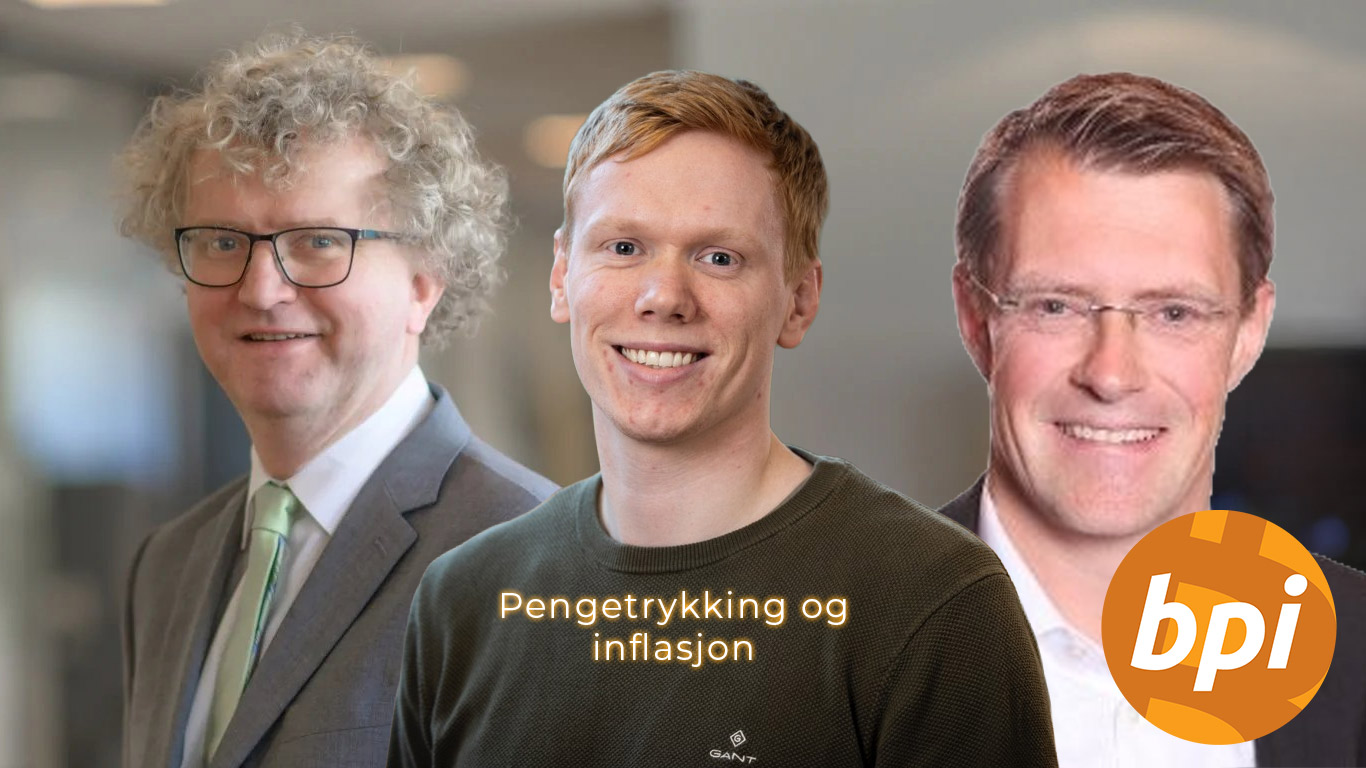
    Bitcoinpolitisk Institutt, or Bitcoin Policy Norway, organized a neat panel session at its events in Oslo’s Litteraturhuset last week. The Satoshi-samtale (“Satoshi talks”) is recorded and released as a podcast, worth listening for a deep dive into the monetary economics of Bitcoin.


    For years, BPI has put on semi-regular events in Oslo and this one doesn’t disappoint. Two guests from the banking system (Jan Ludvig Andreassen, the chief economist at Eika, and Arne Kloster, special adviser to Norges Bank) provided their views, with BPI’s Ole Emil Augland offering critical and, occasionally, quite critical, Bitcoin-oriented commentary.


    Across topics that included the intricacies of the consumer price index, how inflation works through the economy, and how it relates to money printing, the panelists meandered toward what the point and purpose of a monetary system is. At the end, Arne gave us the most succinct conflict of visions involved between bitcoin and fiat:

    “There’s a trade-off between stability and flexibility, and the monetary system we have today is very flexible but it comes with some risks, whereas a monetary system that’s closer to the old-fashioned gold standard is more stable but won’t perhaps contribute to economic growth in the same way.”


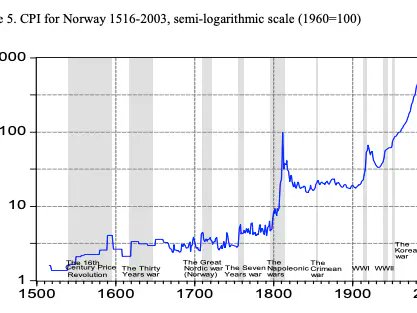
    Here’s the consumer price index graph that Arne presented, based on research and statistics from Norges Bank, and which provided backdrop to the overall conversation:

    Consumer Price Index (CPI), Norway, 1516-2003
    Norway, CPI 1516-2003, long historic time series. Source: Norges Bank.

    Briefly going through that history, Arne suggests that “inflation is, in a way, a phenomenon of war; it’s when lots of money is printed to finance soldiers’ pay, food, canons… war is expensive.”

    And what he brought to weigh on the subject was a very standard remark among the economics profession: What can be even worse than inflation is the price level change variability, “because that makes economic planning difficult.” Stable inflation is manageable since you know that the purchasing power of your money will fall by a particular, credible amount (i.e., the 2% creed), but when the change in money’s worth is unpredictable, money quickly loses its coordinating role and the monetary system turns into chaos.


    Jan Ludvig interjected that household wealth has transformed greatly in the last four decades in Norway, where real estate is concerned. It used to be mostly owned by institutions, but from around 1985 Norway experienced “a historic transfer of value from institutions to households, which also meant that changes in property prices meant so much more than they used to. But they’re not part of the money supply!” Which they probably should, Jan Ludvig suggested.  

    In a beautifully phrased remark by Ole, about the downsides of calculating a consumer price index, we learn that just because a computer improved in raw, objective power (e.g., RAM, memory, speed), statisticians make an error in assuming that the economic value of the item has increased in proportion.

    “They can’t say that ‘yes, the price should be 12,000 instead of 11,000 […] they’re trying to calculate objectively something that is subjective, that is value.”


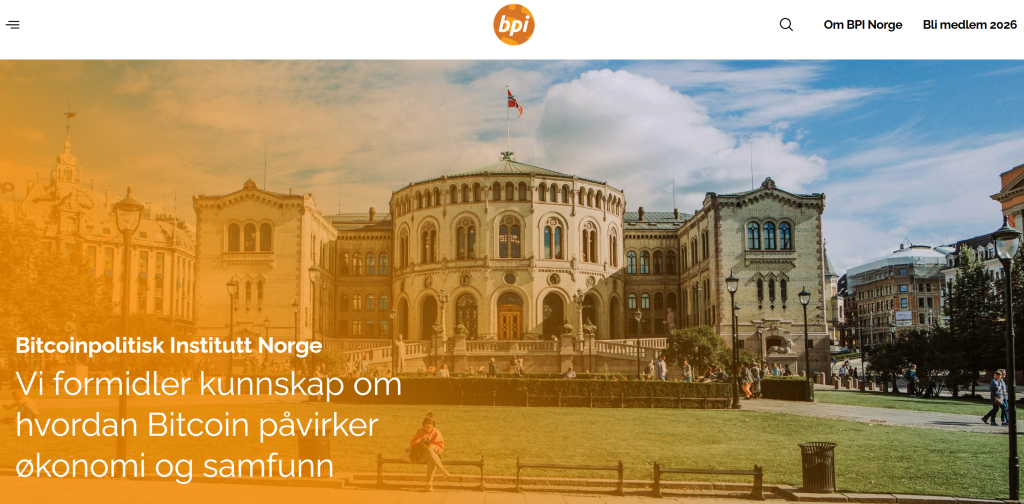
    You can learn more about Bitcoin Policy Norway (“Bitcoinpolitisk Institutt Norge”) and their work via BPINorge.no.

    Norway's Parliament, Stortinget, overlaid with Bitcoinpolitisk Institutt Norge's frontpage and slogan: Vi formidler kunnskap om hvordan Bitcoin påvirker økonomi og samfunn
    A view of Norway’s parliament, Stortinget, as seen on Bitcoin Policy Norway’s front page.