Category: Politics

  • Against Mass Surveillance: Stop DAC8

    Against Mass Surveillance: Stop DAC8

    Nineteen-Eighty-Four has never felt closer, with devices that spy on us and powerful algorithmic machines tracking our every move and financial transaction. The noose around our financial freedoms is ever-tightening.


    BULL Bitcoin, a Canadian non-custodial Bitcoin exchange and an Innovators-level sponsor of BTCHEL2026, today launches its Stop DAC8 campaign, designed to counter the 2026 EU Directive that requires European crypto-asset service providers to collect and hand over identity and transaction data for millions of customers. DAC8 came into effect this year, with the first reports expected by 2027. 

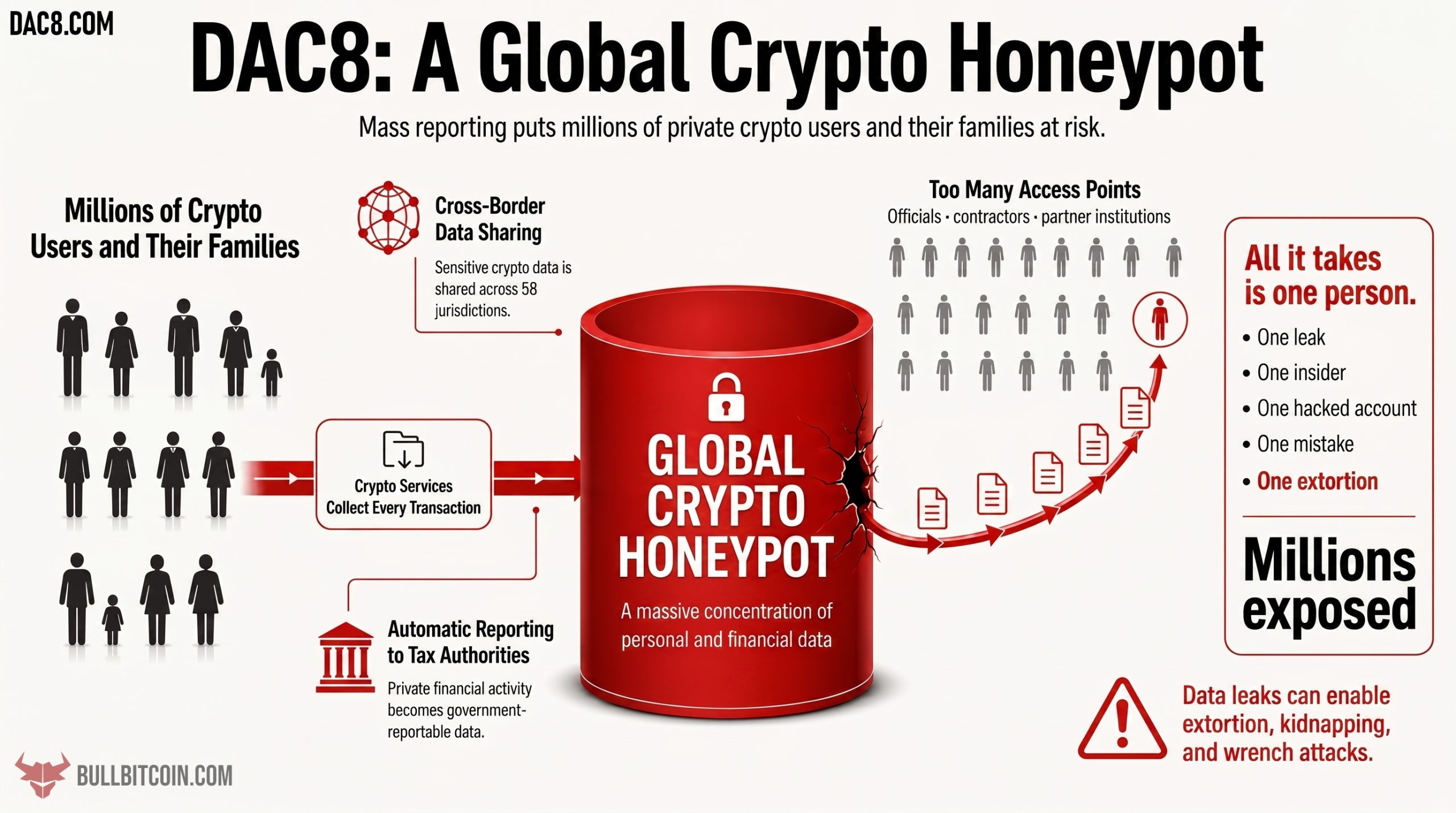
    Under the guise of transparency, the stated purpose of DAC8 is to exchange information between tax authorities, but “the danger lies in the creation of a mass database linking legal identity, home address and transaction history, including transactions that have no relevance whatsoever to taxation,” reads the BULL Bitcoin press release on July 8.  


    Earlier this year, BULL Bitcoin, recently MiCA-licensed through its AMF (LEONOD SARL) entity, filed a summary petition to France’s Conseil d’État, a legal advisor for the executive branch and an administrative court within the French legal system. Bull Bitcoin petitions France’s Conseil d’État to strike down DAC8, which constitutes a dangerous mass surveillance of crypto-assets and their holders. It estimates that between 40 and 135 million Europeans are at physical risk if their crypto data is leaked or abused.


    “DAC8 has transformed the concept of Know Your Customer into Kill Your Customer,” says Francis Pouliot, CEO of Bull Bitcoin.


    Honeypots Are Dangerous and Unnecessary. Don’t Create (More of) Them


    France has been particularly hard hit by attacks against and kidnappings of known personalities in the broader cryptocurrency sphere. When your address and other personal information about you and your family are leaked, together with exact bitcoin (or cryptocurrency) withdrawals in your name, you’re put in particular danger. The microscopic tax and anti-money laundering benefits that may stem from MiCA and DAC8 legislation are completely undermined by the increased threat and danger these informational honeypots pose to civilians.

    “Against a backdrop of daily data leaks and a surge in assaults and kidnappings targeting crypto-asset holders, building such a database endangers the physical safety of millions of holders and their loved ones. The civil servants with access to this data are also put at risk, becoming targets for anyone seeking to obtain it”

    “We’re at a crossroads,” reads the manifesto accompanying the DAC8 website. BULL Bitcoin holds DAC8 to be the “greatest threat to date to the survival of fundamental rights and Bitcoin’s cypherpunk principles.”

    Bull Bitcoin stands as a bulwark: we refuse to be accomplices to this abuse by governments. We refuse to submit without a fight.

    That is why we have launched a legal action to strike down this law.

    The manifesto states that the BULL team is “extremely conscious that we are mandated by law to maintain a honeypot of extremely sensitive private information. In practice, we do everything we can to make sure that this data stays within the walled gardens of our system.”


    Press contact: Theo Mogenet, Managing Director of Bull Bitcoin in Europe (theo@bullbitcoin.com).

    X, LinkedIn, platform app, website

  • Deep Monetary Economics in Oslo’s Satoshi Talks

    Deep Monetary Economics in Oslo’s Satoshi Talks

    Bitcoinpolitisk Institutt, or Bitcoin Policy Norway, organized a neat panel session at its events in Oslo’s Litteraturhuset last week. The Satoshi-samtale (“Satoshi talks”) is recorded and released as a podcast, worth listening for a deep dive into the monetary economics of Bitcoin.


    For years, BPI has put on semi-regular events in Oslo and this one doesn’t disappoint. Two guests from the banking system (Jan Ludvig Andreassen, the chief economist at Eika, and Arne Kloster, special adviser to Norges Bank) provided their views, with BPI’s Ole Emil Augland offering critical and, occasionally, quite critical, Bitcoin-oriented commentary.


    Across topics that included the intricacies of the consumer price index, how inflation works through the economy, and how it relates to money printing, the panelists meandered toward what the point and purpose of a monetary system is. At the end, Arne gave us the most succinct conflict of visions involved between bitcoin and fiat:

    “There’s a trade-off between stability and flexibility, and the monetary system we have today is very flexible but it comes with some risks, whereas a monetary system that’s closer to the old-fashioned gold standard is more stable but won’t perhaps contribute to economic growth in the same way.”


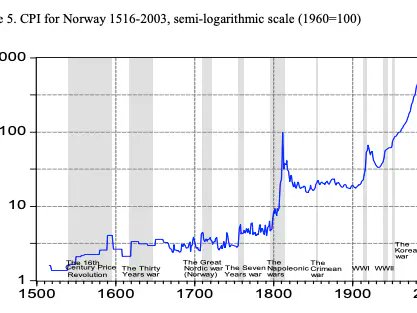
    Here’s the consumer price index graph that Arne presented, based on research and statistics from Norges Bank, and which provided backdrop to the overall conversation:

    Consumer Price Index (CPI), Norway, 1516-2003
    Norway, CPI 1516-2003, long historic time series. Source: Norges Bank.

    Briefly going through that history, Arne suggests that “inflation is, in a way, a phenomenon of war; it’s when lots of money is printed to finance soldiers’ pay, food, canons… war is expensive.”

    And what he brought to weigh on the subject was a very standard remark among the economics profession: What can be even worse than inflation is the price level change variability, “because that makes economic planning difficult.” Stable inflation is manageable since you know that the purchasing power of your money will fall by a particular, credible amount (i.e., the 2% creed), but when the change in money’s worth is unpredictable, money quickly loses its coordinating role and the monetary system turns into chaos.


    Jan Ludvig interjected that household wealth has transformed greatly in the last four decades in Norway, where real estate is concerned. It used to be mostly owned by institutions, but from around 1985 Norway experienced “a historic transfer of value from institutions to households, which also meant that changes in property prices meant so much more than they used to. But they’re not part of the money supply!” Which they probably should, Jan Ludvig suggested.  

    In a beautifully phrased remark by Ole, about the downsides of calculating a consumer price index, we learn that just because a computer improved in raw, objective power (e.g., RAM, memory, speed), statisticians make an error in assuming that the economic value of the item has increased in proportion.

    “They can’t say that ‘yes, the price should be 12,000 instead of 11,000 […] they’re trying to calculate objectively something that is subjective, that is value.”


    You can learn more about Bitcoin Policy Norway (“Bitcoinpolitisk Institutt Norge”) and their work via BPINorge.no.

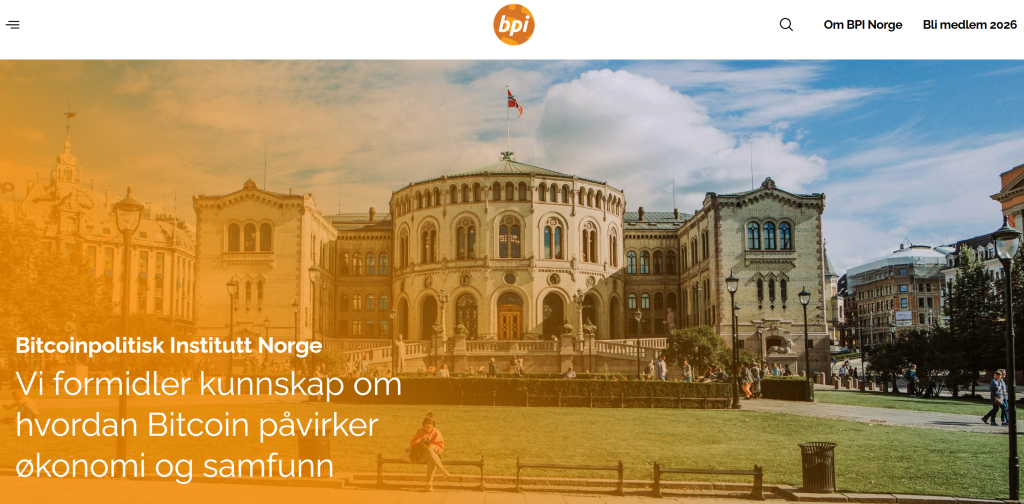
    Norway's Parliament, Stortinget, overlaid with Bitcoinpolitisk Institutt Norge's frontpage and slogan: Vi formidler kunnskap om hvordan Bitcoin påvirker økonomi og samfunn
    A view of Norway’s parliament, Stortinget, as seen on Bitcoin Policy Norway’s front page.