
Kategoria: Monetary Economics

  • Iceland and Using Inflation as the Release Valve

    Iceland and Using Inflation as the Release Valve

    The Danish economist Lars Christensen recently visited our beloved little nature island, to speak at the Open Day for the Icelandic Financial Services Association. Having observed and analyzed markets for decades — he famously warned about the overheating and imbalances in the economy before the 2008 meltdown — and returning to Iceland again and again, he had a few interesting things to say about this exceptional and exceedingly rich, yet dysfunctional economy.


    Christensen made quite some noise in local media, too, but then spent a full hour on his Makropuls podcast (in Danish) discussing the groundhog-day phenomenon in Icelandic political-economy matters:

    “Iceland isn’t primarily a Nordic economy”
    – Lars Christensen


    For all of us Nordic aficionados, we should realize that the Icelandic economy operates fundamentally differently from the more mature, developed (and diversified!) Nordic economies. We are not the same… and actually not in a good way.


    While a little bit of a spicy take, it’s true in the very nature of what we produce here. This tiny island nation has several elements of all the Nordic countries, but none of the mature, balancing, and stabilizing economic safeguards that make those economies work reasonably well. Iceland is also the (annoyingly rich) little brother who hasn’t figured it out yet. “It’s a globally exposed economy” — tourism, fish, aluminum, data centers — all of which become a modern version of a raw-commodity exporting third-world nation: a complete price taker, walloped around by an ocean of capital inflows and outflows into hot sectors that might not be thriving next year: “It’s an economy where many factors can easily become destabilizing.”


    As Lars explained both in the podcast and in a feature with Morgunblaðið, an Icelandic business news outlet, Iceland really shouldn’t have a money of its own: money wants to be one, so every existing fiat currency fights against monetary gravity for its existence. While all, or most, have some rationale for their arrangements and certainly play some national-identity function, the Icelandic króna has neither:

    “Icelanders very much want currency stability and… I don’t think I’ve ever been to a country with so much love to for their country and so much hate for their own currency as in Iceland.”


    Plus, given the primary extracting nature of the Icelandic economy and the dysfunctional economic institutions — centralized wage negotiations without internalized consequences; a weak, flaccid and always-accommodating central bank — to patch up the boom-and-bust swings that characterize commodity trades, Seðlabanka Íslands is forced to perform too much of the stabilizing, countervailing balancing act.

    Translated from the Vísir interview,

    “Christensen says Denmark has learned from inflation and economic difficulties in previous decades: government, business and unions must take joint responsibility. In Iceland, he sees more conflict between factions and the same disputes repeating themselves. He points out that Icelanders are good at standing together when the national teams compete in handball and football. He would like to see more of that solidarity in the fight against inflation and a greater willingness to understand the perspectives of others.”


    In the podcast episode, Christensen outlined this political-economy conundrum further:

    “What happens in Iceland all the time is the distributional troubles of finding 100 krónur on the street… somebody finds it, and now what? Who gets the gains? Who gets to keep the windfall?”


    Basically: “One sector, be it fishery or aluminum smelters or data centers or tourism, takes off and someone makes a ton of money. The constant political conversation in Iceland becomes: who received something they shouldn’t have had, and how should those things be (re)distributed?”

    “I’m not too worried about the Icelandic economy. It’s doing very well, apart from inflation.” (Vísir)

    …which is sort of the point of his monologue.

    “The Icelandic economy is too small for its own good,” and inflation becomes the central bank’s only way out in facing the aggressive, centralized labor agreements that push for high wage increases unsupported by economic fundamentals. And because there’s been great price inflation in past years, the next round of negotiations include even stronger demands for wages to compensate for the loss of purchasing power. The other Nordic countries fixed this runaway wage-price spiral in the 1970s and 1980s, usually through a combination of local wage determination, pegging the currency, or forcing the unions to internalize the unemployment externality of their too-aggressive actions. But Iceland has had none of that.

    Compare Norway, another Nordic raw commodity exporter. What you do in Norway is take all the oil revenue, collect it in a pot — invested in the oil fund — and take only a small portion into the Norwegian government’s coffers. The extreme rise and fall of the global petroleum business becomes less of a concern in Norway’s economy proper, with the fund and its amassed savings offering a countercyclical buffer. “Norwegians,” explained Christensen, “are able to decouple their great natural resources revenue from what they call onshore Norway.”


    Importantly, the Norwegians counteract the Dutch disease of an overvalued currency hampering their own productive capacities by having this gigantic fund constantly sell kroner to invest in assets denominated in foreign currencies. This, the Icelanders can’t do — or at least, have chosen not to do. It’s not the same singular raw commodity dominating exports year after year (varying between tourism, housing boom, data centers, aluminum, fishery), so levying an appropriate resource tax becomes trickier and less transparent. (Plus, the small-size, rent-seeking nature — some might say “corrupt” — of the political and economic elites, make that arrangement gameable and pretty impossible to achieve.)


    Building up a similar sovereign wealth fund to counteract booms and stabilize or support the economy during busts could be a great way to alleviate Seðlabanka Íslands’ singular response function: inflation as the release valve.


  • Eric Yakes: BTCHEL Is a “Good Vibes” Conference

    Eric Yakes: BTCHEL Is a “Good Vibes” Conference

    An age ago in Bitcoin years (early 2021), Eric Yakes released The 7th Property: Bitcoin and the Monetary Revolution. It was among the first great “Bitcoin-money” books, a standardized genre where authors thoughtfully consider the role of money in society and history, assess its qualities and characteristics, and only brings in bitcoin and its technobabbling details about halfway through.

    “it wasn’t until I wrote a Bitcoin book that I realized there were so many Bitcoin books out there.”


    Over the years, we’ve been inundated with books like that. Some of great quality, like Lyn Alden’s Broken Money that I — full disclosure — edited, and others of regular trash status.

    The writing-publishing endeavor has, as far as I can tell, cooled down a bit, with the audience more than saturated. To publish successful Bitcoin books a cycle-plus after Yakes, you gotta go big macro (Larry Lepard’s The Big Print), big beginner (Natalie Brunell’s Bitcoin is for Everyone) or very specialized (Leon Wankum’s Digital Real Estate or Aaron van Wirdum’s The Genesis Book — both of which I also worked on).

    The book is almost six years old now, so I wondered what Eric would have done differently today. “There’s a million things I’ve learned since writing the book,” Eric says. His major point with The 7th Property was to give a synopsis of money, banking, and bitcoin from an investor standpoint — the latter being the key demographic.

    “The book did much better than I would have expected at the time.” He described how some books are too heavy on opinion and commentary, and others too lengthy and heavy on the raw, dry facts. You have to strike a balance between expertise and editorializing. “I wanted this to be something that is engaging.”

    He received a lot of mixed feedback: some people thought The 7th Property had “a clear understanding of the problem” and dealt with money and banking in a comprehensive way; others that it was too technical of a book, or too summary. Also, “there was a lot of dentists reaching out… that surprised me.”


    I read a quote to him from the book — “For Bitcoin to compete with the incumbent system, the incumbent’s financial services will need to be replicated in bitcoin” (p. 263) — and wondered if, given the Paper Bitcoin Summer and the last year’s treasury company wave, he stands by that line.


    “I 100% still think that statement is true. Bitcoin is something where the value proposition increases with the amount of capital that enters the system.” By way of a tree analogy, Eric tells me that Bitcoin, like trees searching for sunlight, “is growing toward where the capital is, toward financial markets and the stock market specifically.”


    “The larger bitcoin becomes, the more it can stand on its own.” But until then, building bridges to and integrating with where the capital exists today is how way we make Bitcoin bigger. A lot of people in Bitcoinland have an idealized, black-and-white view of how adoption should proceed. “I don’t think it works like that… we don’t get to choose how adoption happens. That idealized path, it doesn’t exist.”


    One thing that hit me on re-reading the book now, a cycle-and-a-half later, is the emphasis throughout monetary history on trading off trust for efficiency. The book gives two seemingly contradictory positions on the matter:

    • “Digital money will reach an inflection point at which people will need to decide if they will trade trust for efficiency once again. It is my goal to convince enough people that they should not.” (p. 57)
    • “some people do not want to spend the time to be their own custodians, and that is perfectly reasonable but potentially costly” (p. 261)

    “This is where my thinking has developed the most on since writing the book.”


    He clarifies that he thinks that this trade-off warning is mostly intended for fiat. As we’re talking, the Liquid hack/heist has just happened, the Coldcard debacle fresh on everyone’s mind, Lightning service providers getting hacked left, right, and centre. When I mention these token wars, and he says that within Bitcoin, he’s softened his stance there a little: “we’re going through growing pains in software. As long as the tools that create security can be used for attack, we’ll reach a system of far more robust software. We’re going through growing pains… in the long run, I’m not so concerned by it.”

    “This is one way in which owning physical gold at home is safer than owning bitcoin (at least until someone shows up at your house and robs you).” He admits that he hasn’t seen any victory laps from the goldbugs on this either, which is sort of surprising.

    At the end of our talk, I ask about Helsinki and BTCHEL, as Eric will give a keynote on the first day and also spoke at the event last year. He says he’s looking forward to heading out to Finland and that “BTCHEL is a good vibes conference.”

    What he loved about last year was that there “seemed to be a lot of new people,” an audience that’s very different from the usual crowd that attends conferences. The BTCHEL team is working at the marginal forefront of Bitcoin, expanding the circle, reaching new audiences.


    Good vibes indeed. See you all next week!


    BTCHEL2026 CTA tickets, 25-26 September
  • Bitcoin Isn’t Money, Says Representative for the Fiat-Issuing Riksbank

    Bitcoin Isn’t Money, Says Representative for the Fiat-Issuing Riksbank

    No explanation, no analysis, no evidence needed.

    In a speech Wednesday at the Ekonomiska museet in Stockholm, Anna Seim (deputy governor of the Riksbank, Sweden’s central bank) spoke at length about money. Her intricate description of the banking system is good and insightful — though not for the reasons you’d expect — and Bitcoiners can learn a lot from it about the monetary system we’re here to supplant.

    What She Said About Bitcoin Was Both Shocking and Astonishing

    Bitcoin is so unimportant to the establishment that it can be denounced by mere words.

    After briefly describing the three functions of money we’re used to from economics textbooks and Bitcoin books alike — medium of exchange, store of value, unit of account; though, interestingly, she inverts the order by putting store of value at the top — she brushes bitcoin aside in one short sentence.


    Introducing the topic by saying that the digital-money split between private and public institutions is heavily discussed these days, she doesn’t want to talk about bitcoin, “Because it can’t be classified as money according to any of the three criteria above.”

    Anna Seim, “What is money?” Sept 9, 2026 (p. 7/8), speech at Ekonomiska museet in Stockholm.

    Fiat and its money-printing mechanism she then describes expertly and at length: bank money is just made up, created when banks make loans; fiat money is backed by nothing but confidence in the central bank and the wider economy; central banks are tasked with keeping pricing rising “at a moderately high level.”


    Straight from the horse’s mouth:

    “Fiat money has no intrinsic value but derives its value from being accepted as a medium of exchange”


    Money’s underlying “commodity” has gone from gold to confidence; “it contains information about with whom value is to be found, and how much.”

    She brings up an exciting paradox in the use of money, using the age-old economics example (harking back to Adam Smith) of a baker selling bread. He’s paid with money, which functions as evidence that the baker has contributed something valuable to society; he can go on and use the money in exchange for other goods and services.

    While money is a record-keeping device — a record of past value created and supplied (see, for instance, the classic article in monetary economics, ‘Money is Memory’) — it also allows you to forget its history: The next guy in the monetary line doesn’t need to know what good or service the previous person supplied the current holder.

    “The money itself is enough evidence of value.”


    …or at least, that’s how money is supposed to work. In the age of KYC (know-your-customer) and excessive (yet impotent) anti-money laundering efforts, permissioned money in the banking system certainly does not forget its history. (Bitcoin doesn’t really do this either, as evidenced by the recent hacks/heists and the very public movement of funds.)

    What makes money work in the end is all about trust, she admits. “New types of money, new technologies and new issuers mean we must find new ways of establishing and maintaining that trust.”

    True. And that trust is betrayed, repeatedly. Satoshi said so at the start (Letters 10:15-18), and we’re saying so right now.

  • Deep Monetary Economics in Oslo’s Satoshi Talks

    Deep Monetary Economics in Oslo’s Satoshi Talks

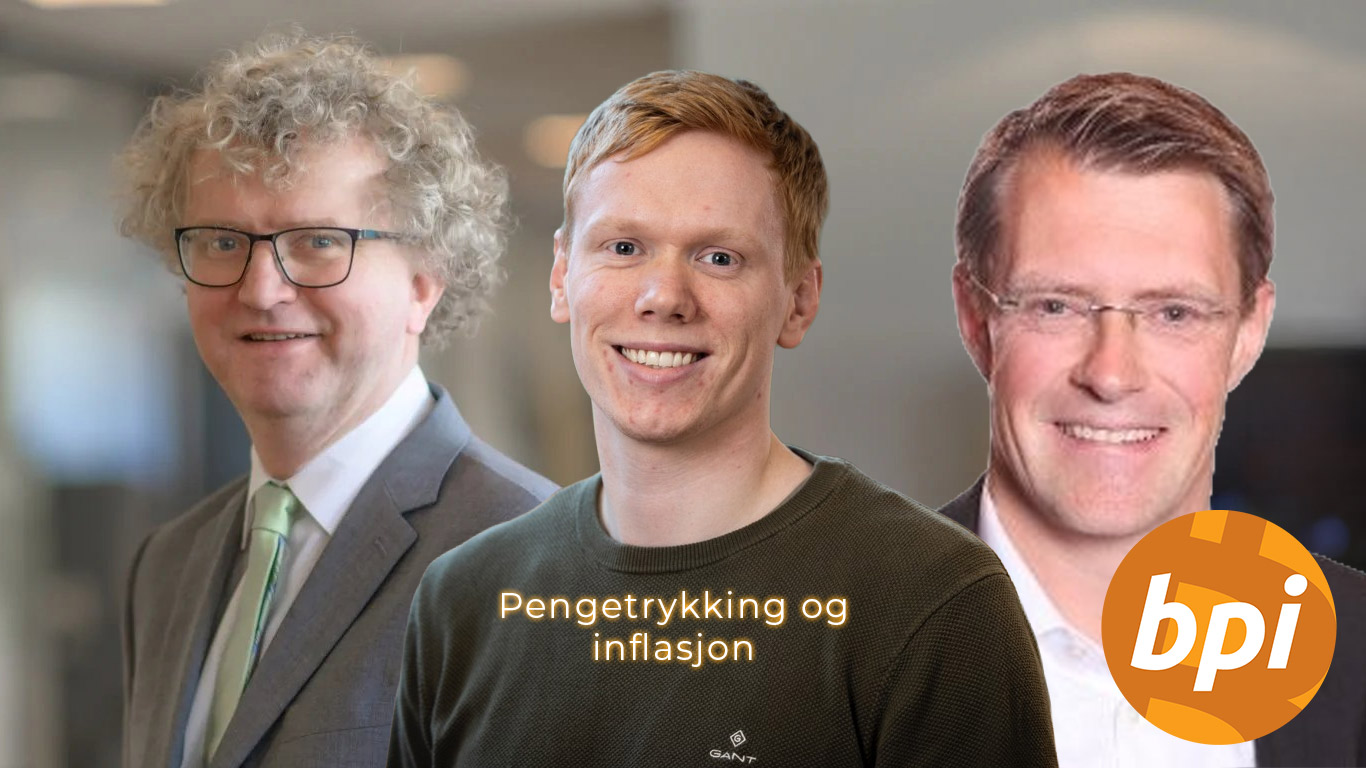
    Bitcoinpolitisk Institutt, or Bitcoin Policy Norway, organized a neat panel session at its events in Oslo’s Litteraturhuset last week. The Satoshi-samtale (“Satoshi talks”) is recorded and released as a podcast, worth listening for a deep dive into the monetary economics of Bitcoin.


    For years, BPI has put on semi-regular events in Oslo and this one doesn’t disappoint. Two guests from the banking system (Jan Ludvig Andreassen, the chief economist at Eika, and Arne Kloster, special adviser to Norges Bank) provided their views, with BPI’s Ole Emil Augland offering critical and, occasionally, quite critical, Bitcoin-oriented commentary.


    Across topics that included the intricacies of the consumer price index, how inflation works through the economy, and how it relates to money printing, the panelists meandered toward what the point and purpose of a monetary system is. At the end, Arne gave us the most succinct conflict of visions involved between bitcoin and fiat:

    “There’s a trade-off between stability and flexibility, and the monetary system we have today is very flexible but it comes with some risks, whereas a monetary system that’s closer to the old-fashioned gold standard is more stable but won’t perhaps contribute to economic growth in the same way.”


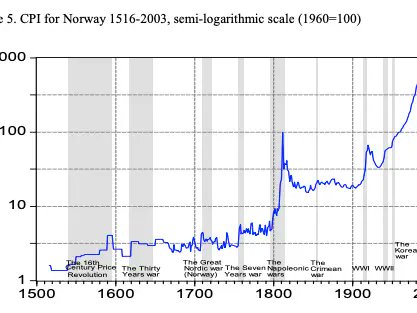
    Here’s the consumer price index graph that Arne presented, based on research and statistics from Norges Bank, and which provided backdrop to the overall conversation:

    Consumer Price Index (CPI), Norway, 1516-2003
    Norway, CPI 1516-2003, long historic time series. Source: Norges Bank.

    Briefly going through that history, Arne suggests that “inflation is, in a way, a phenomenon of war; it’s when lots of money is printed to finance soldiers’ pay, food, canons… war is expensive.”

    And what he brought to weigh on the subject was a very standard remark among the economics profession: What can be even worse than inflation is the price level change variability, “because that makes economic planning difficult.” Stable inflation is manageable since you know that the purchasing power of your money will fall by a particular, credible amount (i.e., the 2% creed), but when the change in money’s worth is unpredictable, money quickly loses its coordinating role and the monetary system turns into chaos.


    Jan Ludvig interjected that household wealth has transformed greatly in the last four decades in Norway, where real estate is concerned. It used to be mostly owned by institutions, but from around 1985 Norway experienced “a historic transfer of value from institutions to households, which also meant that changes in property prices meant so much more than they used to. But they’re not part of the money supply!” Which they probably should, Jan Ludvig suggested.  

    In a beautifully phrased remark by Ole, about the downsides of calculating a consumer price index, we learn that just because a computer improved in raw, objective power (e.g., RAM, memory, speed), statisticians make an error in assuming that the economic value of the item has increased in proportion.

    “They can’t say that ‘yes, the price should be 12,000 instead of 11,000 […] they’re trying to calculate objectively something that is subjective, that is value.”


    You can learn more about Bitcoin Policy Norway (“Bitcoinpolitisk Institutt Norge”) and their work via BPINorge.no.

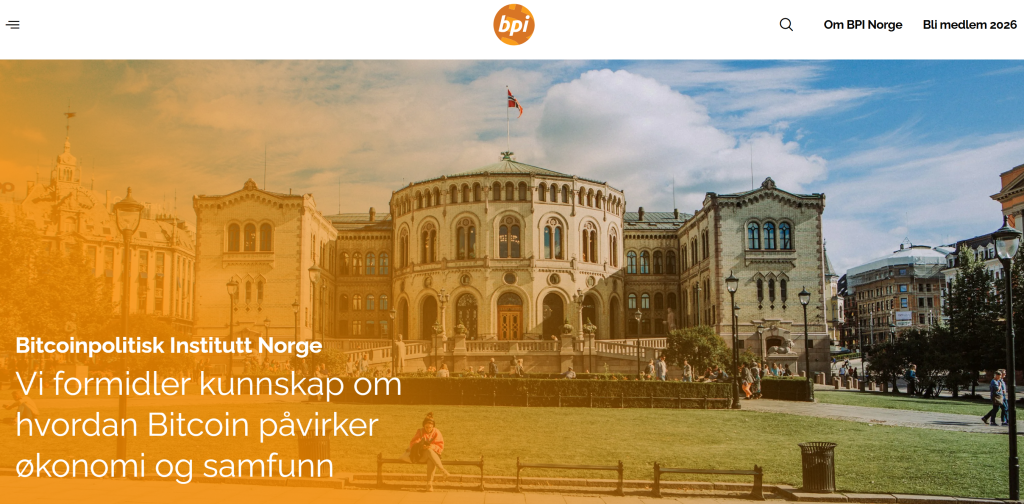
    Norway's Parliament, Stortinget, overlaid with Bitcoinpolitisk Institutt Norge's frontpage and slogan: Vi formidler kunnskap om hvordan Bitcoin påvirker økonomi og samfunn
    A view of Norway’s parliament, Stortinget, as seen on Bitcoin Policy Norway’s front page.